Jazz Noted
1938 · Swing / Big Band · New York

Benny Goodman at Carnegie Hall

Jazz enters the temple of classical music with an integrated band. The concert was recorded by accident.
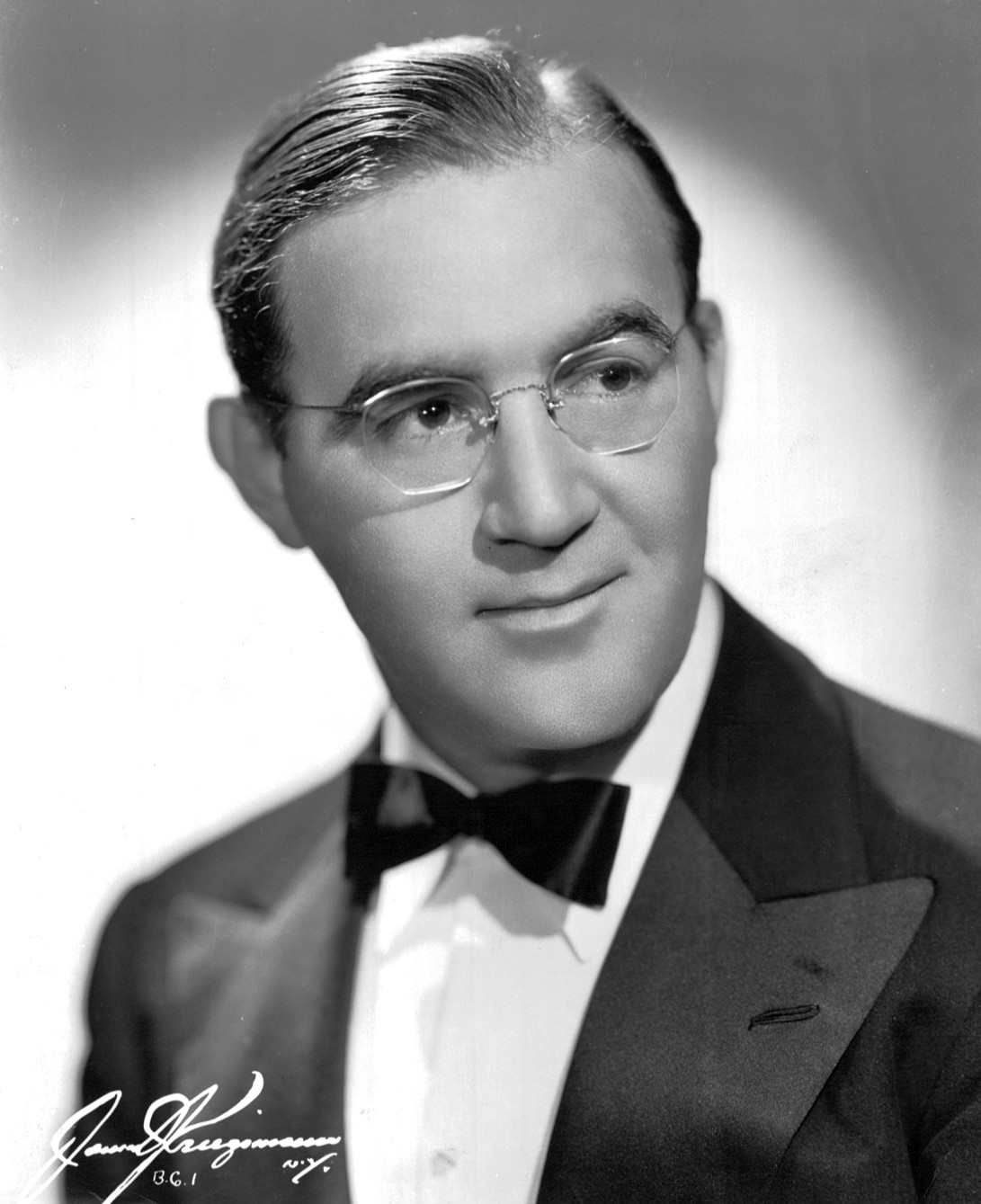
Benny Goodman, 'The King of Swing,' 1942.

On January 16, 1938, Benny Goodman brought his orchestra — including Black musicians Lionel Hampton, Teddy Wilson, and Count Basie’s rhythm section — to Carnegie Hall. It was the first full-scale swing concert in the venue’s history, and the integrated lineup was quietly revolutionary. The concert was recorded almost accidentally — Goodman’s publicist arranged for transcription discs — and sat forgotten in a closet until 1950 when the recordings were released and became one of the best-selling live jazz albums in history. The 12-minute 'Sing, Sing, Sing' remains one of the most electrifying live recordings ever made.

Jazz enters the concert hall. An integrated band plays Carnegie Hall — quietly radical.

Lionel Hampton at the Aquarium, New York, ca. 1946. Hampton's presence on the Carnegie Hall stage was the quiet…
Lionel Hampton at the Aquarium, New York, ca. 1946. Hampton's presence on the Carnegie Hall stage was the quiet revolution inside the loud one. In 1936, Goodman had made a highly visible stand for integration by hiring Hampton and pianist Teddy Wilson for his small group, the most prominent interracial ensemble in mainstream American popular music at the time. At Carnegie Hall, Hampton's vibraphone solo on 'Sing, Sing, Sing' was one of the concert's peak moments. No one in the audience rioted. The integration was presented as self-evident, just musicians playing together, which was the most radical framing of all.
Teddy Wilson, the pianist who broke a major barrier when Goodman hired him in 1935, making the Benny Goodman Trio one…
Teddy Wilson, the pianist who broke a major barrier when Goodman hired him in 1935, making the Benny Goodman Trio one of the first prominently integrated groups in mainstream American music. Wilson's elegant, fleet-fingered style was the opposite of Earl Hines's percussive attack. It swung with aristocratic precision. At Carnegie Hall, Wilson performed in the trio and quartet segments alongside Goodman and Hampton, the three of them integrated onstage in a venue that, just blocks from Harlem, existed in an entirely different America.
Gene Krupa, Goodman's drummer, whose explosive performance on 'Sing, Sing, Sing' became the concert's most legendary…
Gene Krupa, Goodman's drummer, whose explosive performance on 'Sing, Sing, Sing' became the concert's most legendary moment. The piece ran twelve minutes — four times the length of a normal swing number — and Krupa's tom-tom pattern drove the entire thing with a primal energy that had the Carnegie Hall audience dancing in the aisles. It was the most sustained improvised performance ever captured on record up to that point. Krupa became the first celebrity drummer in American music, his face as well-known as any bandleader's. He left Goodman's band a month later to start his own.
A crowd of young people at a Benny Goodman concert in Oakland, California. By 1938, Goodman was the biggest draw in…
A crowd of young people at a Benny Goodman concert in Oakland, California. By 1938, Goodman was the biggest draw in popular music, the 'King of Swing' who had accidentally launched the swing era three years earlier during a radio broadcast from the Palomar Ballroom in Los Angeles. The Carnegie Hall concert was supposed to prove that jazz deserved the concert hall; instead it proved that the concert hall needed jazz. The recordings, rediscovered in 1950 and released on Columbia, became one of the best-selling live jazz albums in history.

Listen and read more

Open in the interactive timeline →

More from Swing / Big Band