Jazz Noted
1925 · Swing / Big Band · Chicago

Louis Armstrong's Hot Five Sessions

Louis Armstrong pioneers the jazz solo. The most consequential recording sessions in the history of the music.
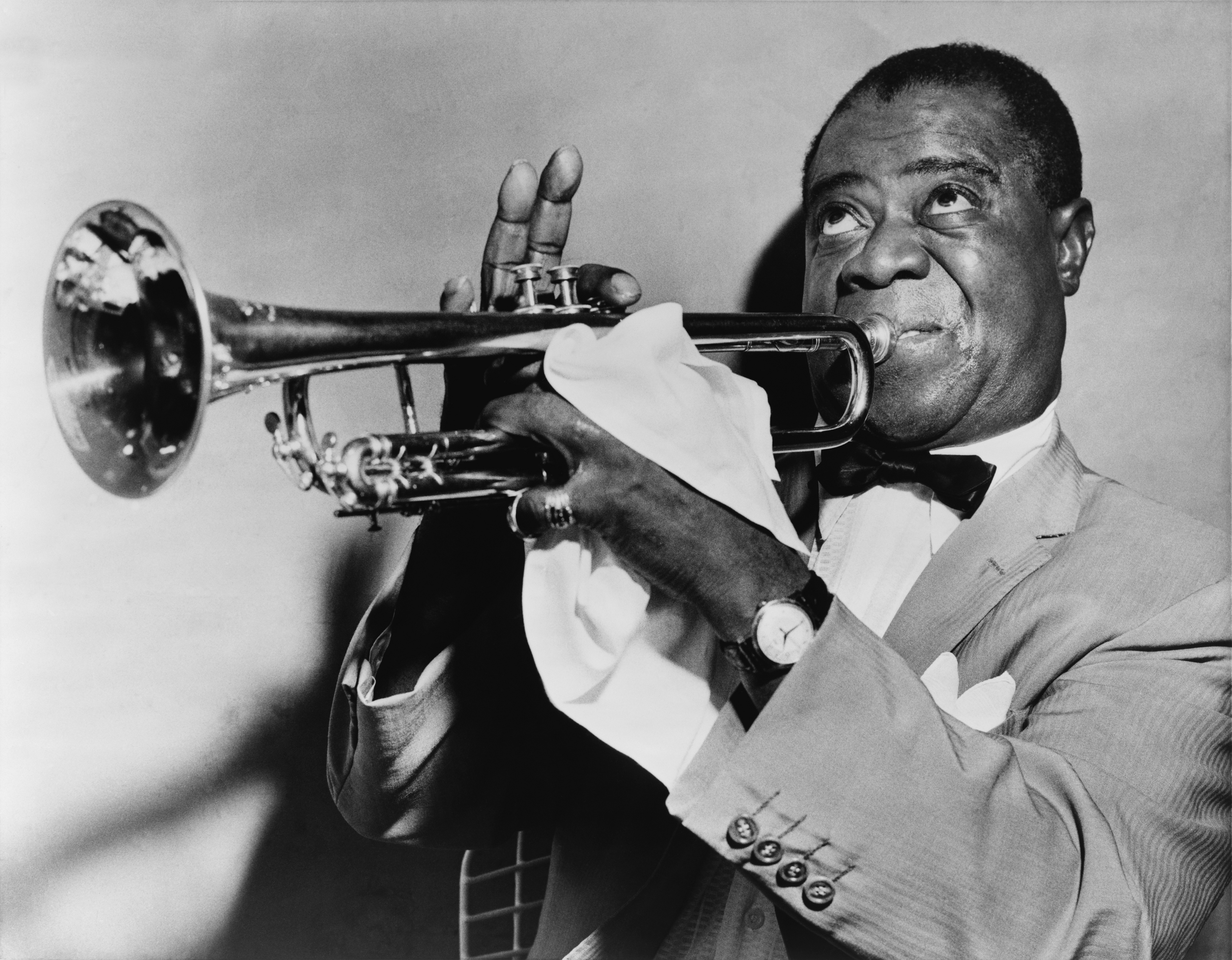
Louis Armstrong. Photo: Library of Congress.

Between 1925 and 1928, Louis Armstrong recorded roughly 65 tracks with his Hot Five and Hot Seven ensembles for Okeh Records in Chicago. These sessions didn't just produce great music—they fundamentally redefined jazz. Before Armstrong, jazz relied on collective improvisation; after him, it became a soloist's art. His virtuosity, swing feel, and emotional depth on recordings like 'Heebie Jeebies' and the seminal 'West End Blues' became the template every jazz musician since has responded to, whether they know it or not.

Established the jazz solo as the central element of the music and pioneered the soloist-driven model that still defines the genre.

Fate Marable's New Orleans band on the S.S. Sidney, ca. 1918. Before Chicago, before fame, the teenage Armstrong…
Fate Marable's New Orleans band on the S.S. Sidney, ca. 1918. Before Chicago, before fame, the teenage Armstrong apprenticed on Mississippi riverboats, playing for dancing crowds as the boats traveled from New Orleans to St. Louis and back. It was his conservatory — he learned to read music, to play for an audience, to keep time. When he arrived in Chicago in 1922 to join King Oliver's Creole Jazz Band, he was already the best trumpet player in New Orleans. He just hadn't proven it to anyone else yet.
Earl 'Fatha' Hines, 1947. Hines was Armstrong's pianistic equal — the only musician on the Hot Five and Hot Seven…
Earl 'Fatha' Hines, 1947. Hines was Armstrong's pianistic equal — the only musician on the Hot Five and Hot Seven sessions who could match him for invention and swing. Their 1928 duet 'Weather Bird' is one of the most astonishing recordings in jazz: two virtuosos engaged in a spontaneous musical conversation at breakneck speed, finishing each other's phrases, daring each other higher. Hines essentially invented 'trumpet-style' piano — playing single-note melodic lines with his right hand instead of the ragtime patterns that came before.
Louis Armstrong performing in Amsterdam, 1955. By this time he was the most famous jazz musician on Earth — but the…
Louis Armstrong performing in Amsterdam, 1955. By this time he was the most famous jazz musician on Earth — but the Hot Five and Hot Seven recordings remained the foundation of his legacy. Those roughly 65 tracks, made with pickup bands that never performed live, generated ideas that the entire jazz world would spend decades absorbing: scat singing (according to the famous story, invented on the spot when he dropped his lyric sheet on 'Heebie Jeebies' — likely apocryphal, but the legend stuck), swing rhythm, solo construction that told a story with a beginning, middle, and end. The sessions cost almost nothing to produce. They changed everything.
A young Louis Armstrong, ca. early 1920s. He grew up in grinding poverty in the Storyville neighborhood of New…
A young Louis Armstrong, ca. early 1920s. He grew up in grinding poverty in the Storyville neighborhood of New Orleans, was sent to the Colored Waif's Home at eleven for firing a pistol on New Year's Eve, and learned cornet from the home's music teacher, Peter Davis. By twenty-four he was in a Chicago studio making the recordings that would define an art form. The Hot Five sessions weren't just technically revolutionary — they captured the sound of a man discovering, in real time, that there were no limits to what the music could do.

Listen and read more

Open in the interactive timeline →

More from Swing / Big Band