Jazz Noted
1945 · Bebop · New York

Charlie Parker Records 'Ko-Ko'

Under three minutes that sound like nothing anyone has heard before. The bebop manifesto.
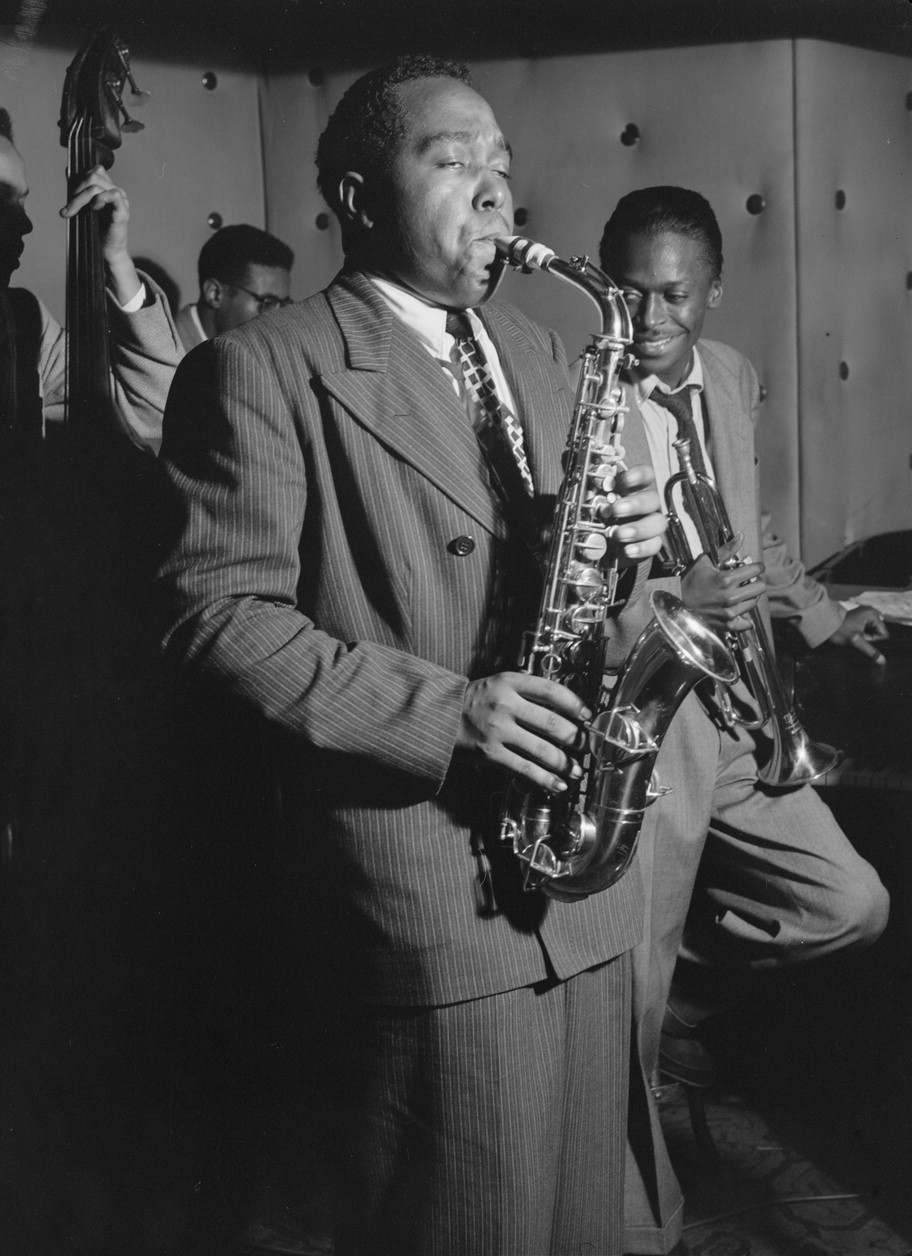
Charlie Parker, Tommy Potter, Miles Davis, Max Roach. William P. Gottlieb Collection, Library of Congress.

Charlie Parker's 'Ko-Ko,' recorded on November 26, 1945 for Savoy Records, is bebop's declaration of independence—virtuosic, harmonically radical, and performed at a tempo that leaves most musicians in the dust. Based on the changes of 'Cherokee,' Parker's alto saxophone weaves through the chord structure with a fluency and speed that redefined what was technically possible on the instrument. Miles Davis, present at the session, did not play on this track because he could not handle the tempo; Dizzy Gillespie took over on trumpet. The recording is a line in the sand: before 'Ko-Ko' and after.

The definitive bebop recording. Redefined virtuosity and harmonic complexity in jazz.

Charlie Parker, 1947. 'Ko-Ko' is based on the chord changes of Ray Noble's 'Cherokee' — a tune Parker had obsessed…
Charlie Parker, 1947. 'Ko-Ko' is based on the chord changes of Ray Noble's 'Cherokee' — a tune Parker had obsessed over since his Kansas City days. The legend is that the breakthrough came one night at a Harlem chili house in late 1939: Parker realized he could improvise on the upper intervals of a chord — the ninths, elevenths, thirteenths — and use those as the basis for a new melody. 'I could hear it,' he later said. 'I could play the thing I'd been hearing.' On 'Ko-Ko,' he proved it at a tempo that still staggers musicians eighty years later.
Dizzy Gillespie, who played both trumpet and piano on 'Ko-Ko' — switching instruments mid-take. The nineteen-year-old…
Dizzy Gillespie, who played both trumpet and piano on 'Ko-Ko' — switching instruments mid-take. The nineteen-year-old Miles Davis was supposed to play trumpet on the full session, but couldn't handle the breakneck 'Cherokee' changes. Gillespie grabbed Miles's trumpet, played the blistering introduction with his own mouthpiece, set it down, walked to the piano, and comped behind Parker's solo because the hired pianist, Argonne Thornton, wasn't up to the changes either. It was a date where only the very best survived.
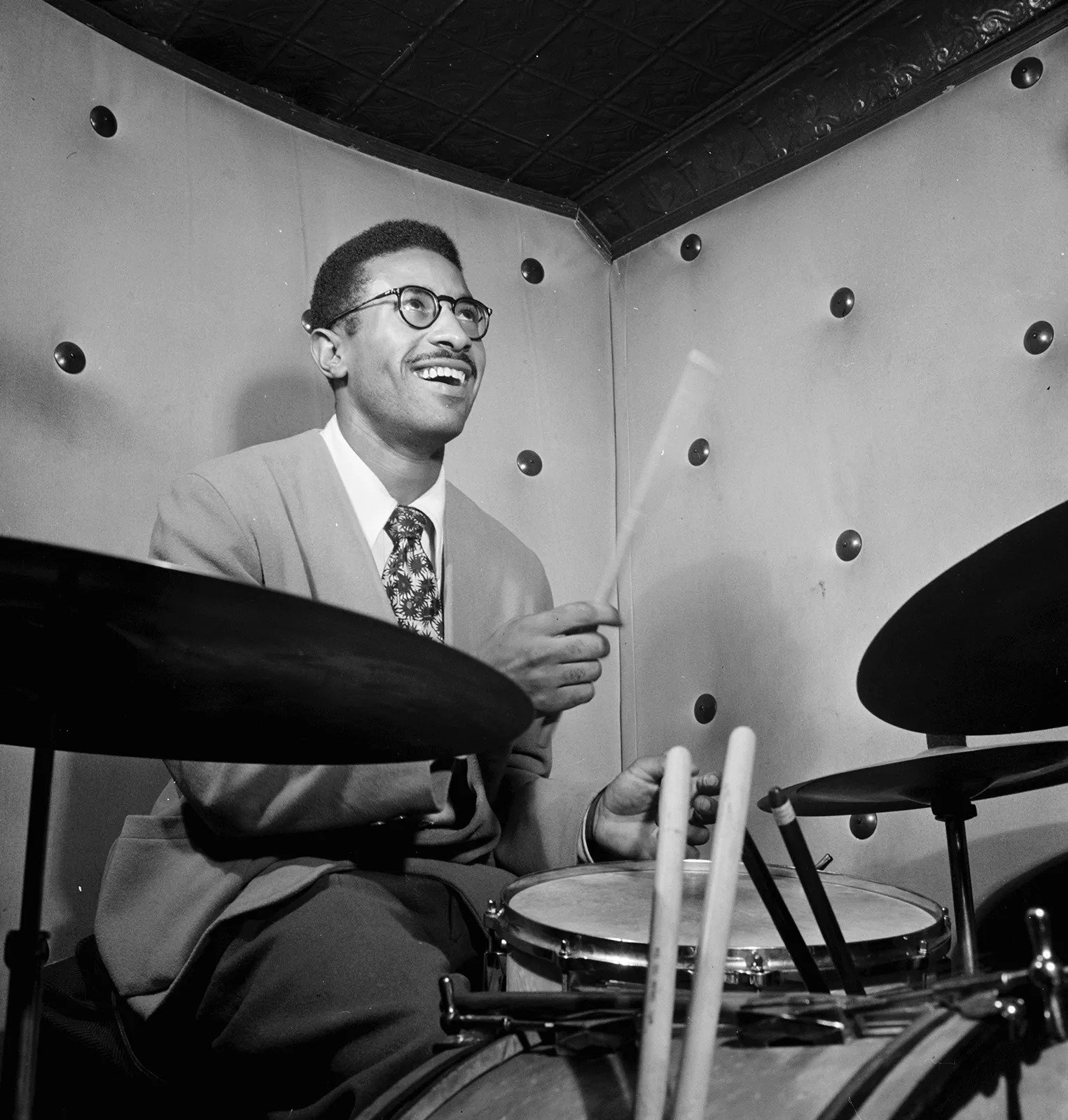
Max Roach at the Three Deuces, ca. 1947. Roach was twenty-one when he recorded 'Ko-Ko,' and his drumming on the track…
Max Roach at the Three Deuces, ca. 1947. Roach was twenty-one when he recorded 'Ko-Ko,' and his drumming on the track is as revolutionary as Parker's saxophone. He shifted the primary timekeeping from the bass drum to the ride cymbal, using the kick drum for unpredictable accents — 'dropping bombs,' as musicians called it. This freed the drums from mere rhythm-keeping and turned them into a melodic, conversational instrument. Roach went on to become one of the most politically engaged musicians in jazz, but on this date he was simply the only drummer alive who could keep up with Parker.
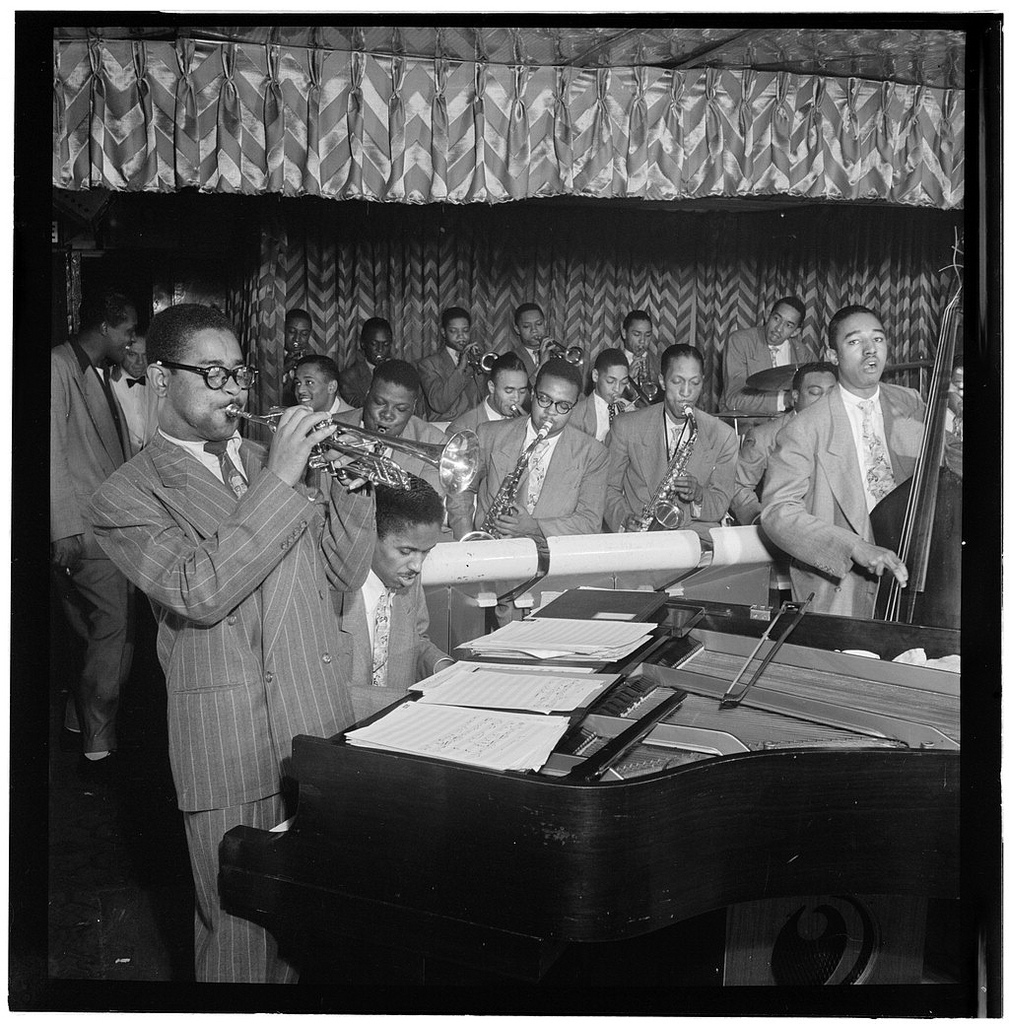
Dizzy Gillespie's band with John Lewis, Cecil Payne, Miles Davis, and Ray Brown. The young Miles Davis, who couldn't…
Dizzy Gillespie's band with John Lewis, Cecil Payne, Miles Davis, and Ray Brown. The young Miles Davis, who couldn't cut the tempo on 'Ko-Ko,' would later build an entire aesthetic around restraint and economy — the opposite of Parker's virtuosic velocity. But in November 1945, the nineteen-year-old from East St. Louis was simply outgunned. He sat in the studio and listened to Parker and Gillespie play at a level he couldn't yet reach. Within a decade, Davis would lead the counter-revolution: cool jazz, modal jazz, a stripped-down beauty that made 'Ko-Ko's' fury sound like ancient history. The student would surpass his teachers by going in the other direction.

Listen and read more

Open in the interactive timeline →

More from Bebop