Jazz Noted
1964 · Hard Bop & Modal · New York

Nina Simone: 'Mississippi Goddam'

Written in under an hour after the 16th Street Baptist Church bombing. Entire Southern states ban the record.

Nina Simone, 1965.
Nina Simone, 1965.

Nina Simone wrote 'Mississippi Goddam' in a fury after the 1963 bombing of the 16th Street Baptist Church in Birmingham, Alabama, which killed four young Black girls. The song, debuted at Carnegie Hall in 1964, was unlike anything in popular music — a blistering, sarcastically upbeat indictment of American racism delivered with a performer's smile and a revolutionary's rage. Radio stations across the South smashed copies. It was returned to distributors with the records snapped in half. Simone, classically trained and rejected by the Curtis Institute in a decision she believed was driven by race, channeled a lifetime of structural racism into three minutes of perfect, furious art.

The civil rights movement's most powerful musical statement. Jazz, blues, and rage fused into protest art.

Nina Simone performing, 1965. She wrote 'Mississippi Goddam' in under an hour, in a white-hot fury after the 16th…
Nina Simone performing, 1965. She wrote 'Mississippi Goddam' in under an hour, in a white-hot fury after the 16th Street Baptist Church bombing in Birmingham, Alabama, in September 1963 — an act of racial terror that took the lives of four young girls. The song debuted at Carnegie Hall in 1964, delivered with a bright, almost showbiz energy that made its lyrics even more devastating. It was a show tune about the horror of American racism, and the dissonance between the melody and the message was the point. Southern radio stations returned the single to the distributor with the records snapped in half.
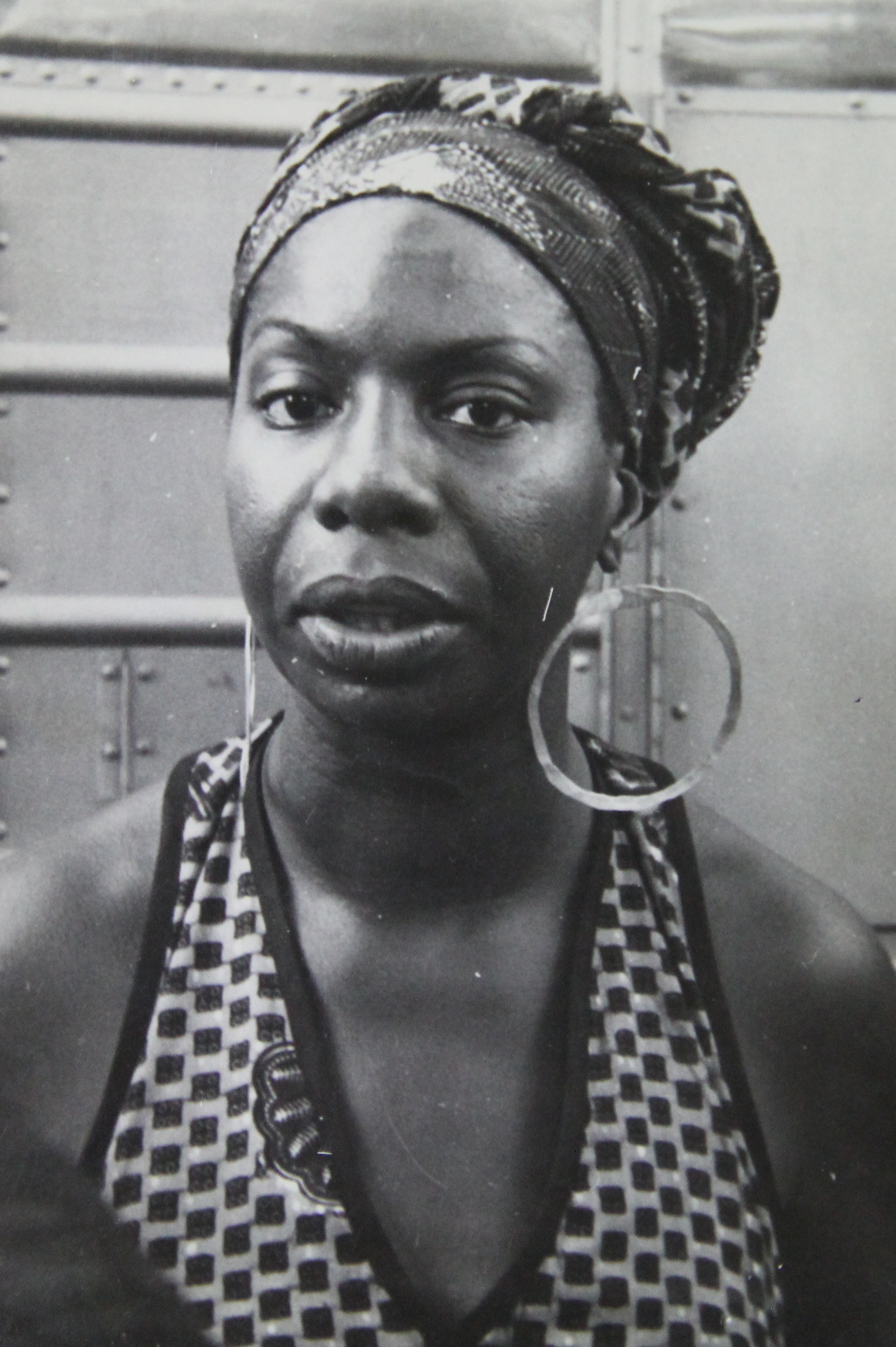
Nina Simone, 1969. By the late 1960s she had become one of the most politically outspoken artists in America, aligned…
Nina Simone, 1969. By the late 1960s she had become one of the most politically outspoken artists in America, aligned with the Student Nonviolent Coordinating Committee and close to figures like Stokely Carmichael and Langston Hughes. Her music became increasingly confrontational — songs like 'Four Women' and 'Backlash Blues' made her a voice of the movement but cost her commercial viability. Record labels grew nervous. Venues grew scarce. The FBI monitored her. She eventually left the United States entirely, living in Barbados, Liberia, Switzerland, the Netherlands, and finally the south of France.
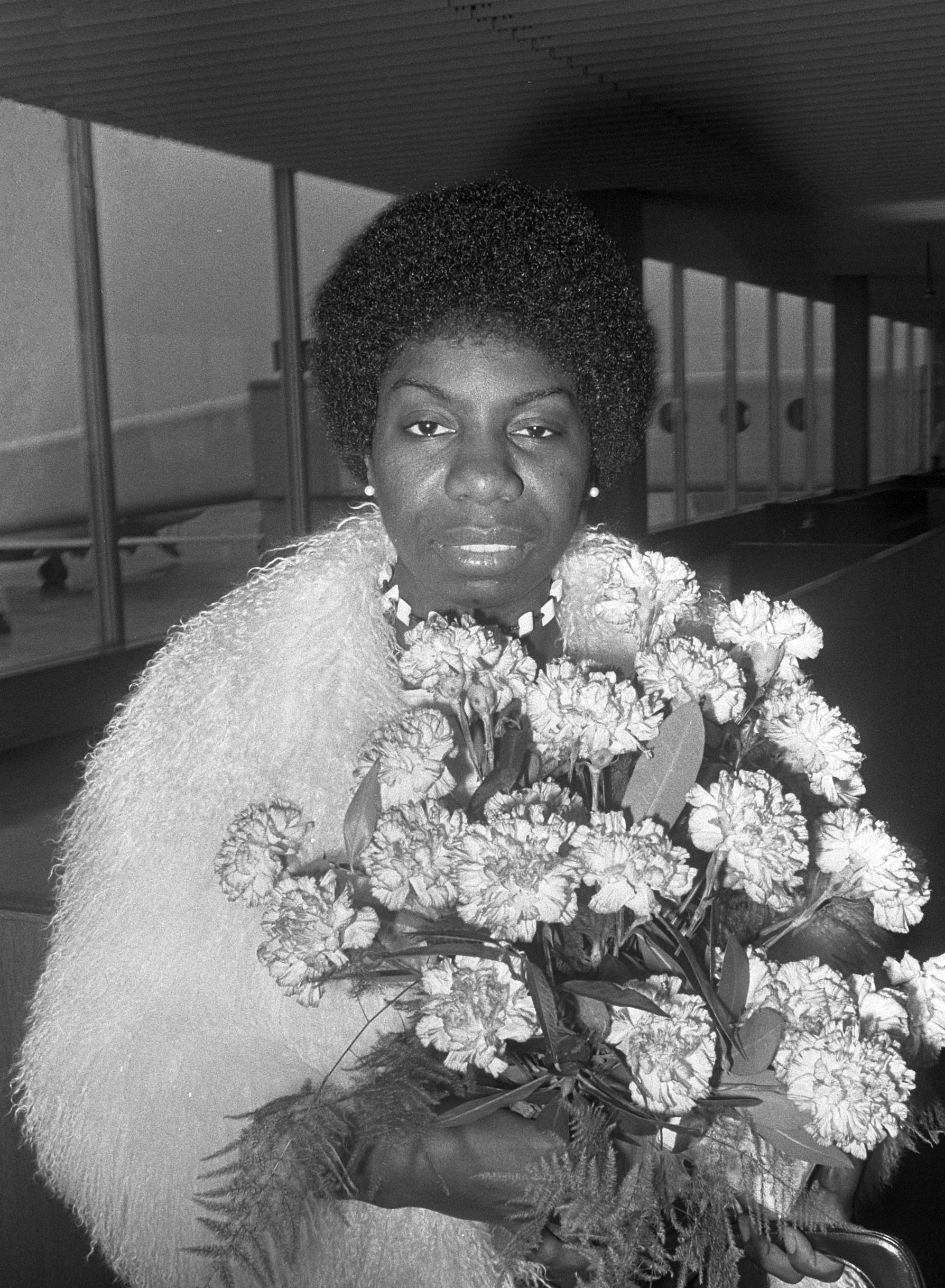
Nina Simone arriving at Schiphol Airport, Amsterdam, 1969. She was as much a classical musician as a jazz artist — her…
Nina Simone arriving at Schiphol Airport, Amsterdam, 1969. She was as much a classical musician as a jazz artist — her piano technique drew from Bach and Chopin as much as from gospel and blues. This fusion of European classical training with African-American musical traditions gave her sound its singular power: the left hand might be playing a Bach invention while the right hand channeled the blues. No other artist in the civil rights era brought this combination of conservatory discipline and unfiltered political fury. She made protest music that was also, unmistakably, high art.
Nina Simone at the Playboy Jazz Festival, 1986. After years of self-imposed exile from the United States, Simone…
Nina Simone at the Playboy Jazz Festival, 1986. After years of self-imposed exile from the United States, Simone continued performing internationally, her concerts unpredictable and electrifying — she might stop mid-song to lecture the audience, or deliver a three-hour set of transcendent beauty. She never softened 'Mississippi Goddam,' never retired it, never apologized for it. She performed it for the rest of her life, each rendition a reminder that the conditions it described had not yet fully changed. She passed away in southern France in 2003. The Curtis Institute awarded her an honorary degree in 2003 — more than fifty years too late.

Listen and read more

Open in the interactive timeline →

More from Hard Bop & Modal